Table of Content
That leaves us with a situation where many people can’t buy a home at all, and most of the ones who can are under severe, perpetual financial stress. To translate that into real-world terms, that means it’ll take the average American 5.4 years to save enough money to buy a home. It also means, even after they’re able to buy a home, they’ll be burdened with high mortgage payments that will likely place a chronic financial strain on their wallet. To buy a home in 2021 means you’re probably going to have to live a little beyond your means — if you’re not locked out of the market entirely. Basically, the housing market has recovered from the 2008 financial crisis, but our bank accounts haven’t. That’s left many Americans no choice but to rent forever or pursue unconventional routes to homeownership.
Today, it’s not uncommon to hear of people offering far more than the seller’s asking price — with some even offering $1 million more than the listing price. Although the overall picture is somewhat gloomy, housing affordability has been distributed a lot like wage growth — unevenly, in both an individual and a geographical sense. Owning a home on the coasts is tough for anyone who doesn’t bring in a high income, but there are still pockets of affordability in the middle of the country, for buyers willing to chase value.
Average House Price to Average Income Ratio (UK)
These values are not much higher than the healthy housing market average of 2.6. In 2000, the growth rate differences between home prices and household income were 17%, 13% and 23% for Charlotte, Columbia and Oklahoma City, respectively. By 2017, however, the same growth rate differences increased to 66%, 56%, and 82%, but household income couldn't keep up, causing these metro areas to be less affordable relative to prior years. The inland metros, Albany and Pittsburgh, are more affordable compared to their coastal counterparts. The price-to-income ratios of these metros were 3.2 and 2.6 in 2017, respectively.
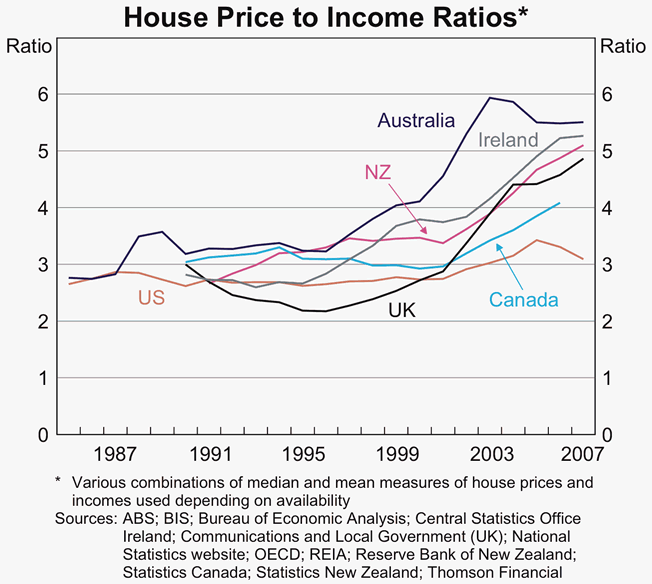
Pundits have blamed lower marriage rates, lifestyle choices , student debt, and the supposed laziness of young people for this decrease, but there’s a much simpler explanation. As high as they are today, price-to-income ratios are still below the all-time highs seen during last decade’s housing boom . In fact, price-to-income ratios nationally were remarkably stable between 1980 and 1999, when they fluctuated between 3.1 and 3.4.
To stay tuned with real estate updates
Consider listing your home on a Friday, as most buyers are out on weekends. If you get to the top of enough people’s open house lists, you could have an offer in hand — far above ask — by the end of the weekend. This attracts more buyers, which increases your chances of competition driving high bids. Homeownership has fallen with each generationthat followed the Baby Boomers. This disparity has had a dramatic and sustained impact on the rate of homeownership. To put that into perspective, home values have averaged 3.9% appreciation annually since 2000.
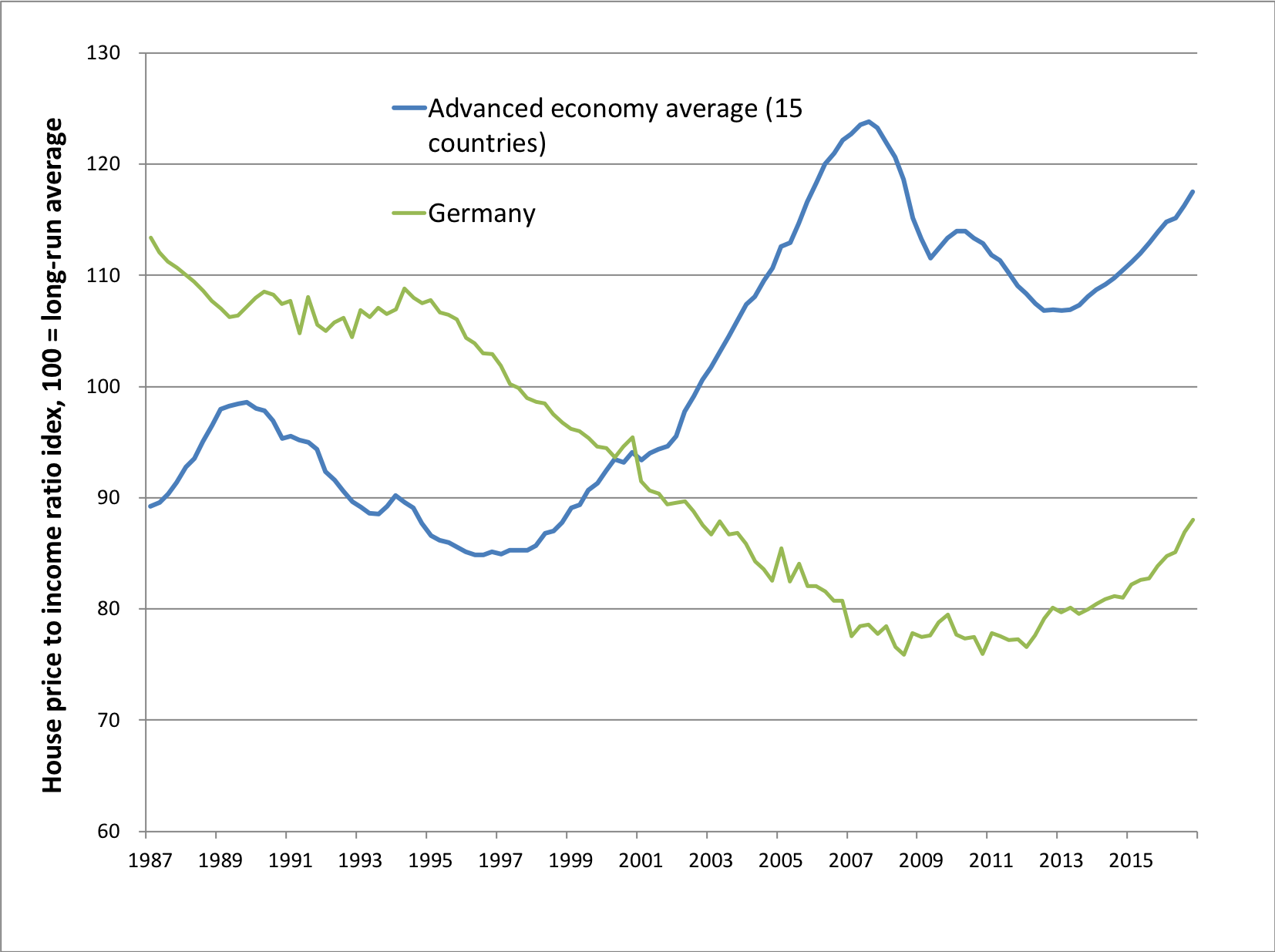
Moreover, the long, secular decline in interest rates that has kept monthly mortgage costs relatively affordable appears to be ending. Consequently, future price increases could lead more directly to increases in mortgage payments. Housing prices include housing rent prices indices, real and nominal house prices indices, and ratios of price to rent and price to income. In most cases, the nominal house price index covers the sales of newly-built and existing dwellings, following the recommendations from the RPPI manual. The real house price index is given by the ratio of the nominal house price index to the consumers’ expenditure deflator in each country from the OECD national accounts database. The price to income ratio is the nominal house price index divided by the nominal disposable income per head and can be considered as a measure of affordability.
Other statistics on the topicGlobal housing market
Homeowners should also be sure that they can afford the various costs that come with homeownership, that can run up to a thousand dollars a month for the average home. These costs include home insurance, property tax, town council fees, the cost of electricity, maintenance costs, etc. The final affordable metro area in the U.S. is Cincinnati, with a house-price-to-income ratio coming in at exactly the recommended 2.6. Rounding out the top five is this historic Alabama city, with a house-price-to-income ratio of 2.5, based on an average home price of $197,416, and an average income of $78,000. The rate of homeownership has fallen with each generation since baby boomers. In a country that holds up homeownership as a pillar of community and wealth creation, that’s a puzzling trend.

Although homeownership is increasingly out of reach on average, there are still some pockets of affordability scattered around the country. Using the recommended house-price-to-income ratio of 2.6, six of the 50 most populated U.S. metro areas are still affordable for prospective homebuyers. However, due to recent rapid increases in home prices, 67 metros recorded their highest price-to-income ratios in 2015–2017. The typical sale price of an existing single-family home in 2017 was 4.2 times greater than the median household income, according to our latest State of the Nation’s Housing report. That’s a significant increase from 2011, when the price-to-income ratio was 3.3, and 1988, when it was 3.2.
What is important is to ensure that your budget works for you and to ensure that you spend appropriately on housing while having enough to meet your other primary necessities. These homeowners, however, should be warned not to forget the total cost of homeownership when drawing up their budget. Tenants may also like to consider moving in with roommates to halve their housing costs. Further, tenants could consider downsizing to slash the housing costs they have to fork out their hard-earned money for each month. The DSR measurement takes into account interest payments, which the Home Price to Income ratio does not. In some leading international cities, such as Hong Kong or London, the Home Price to Income ratio could be quite high, with some sources putting the Home Price to Income ratio for Hong Kong in the double digits.
Mortgage lenders often allow applicants to reduce their interest rates by paying discount points upfront, which could add up to savings over the long term. Upfront closing costs should also be factored into any home-buying decision. Your total debt-to-income ratio, sometimes called the back-end ratio, shows what percentage of your income goes toward all debt obligations, including the mortgage, credit cards and your car payment. Normally, your back-end ratio should not exceed 43 percent of gross monthly income. Your back-end ratio can be calculated by multiplying your annual salary by 0.43 and dividing it by 12 months. According to the Real Estate Witch study, average home values since 1965 have increased by a whopping 118%, from $171,942 to $374,900, accounting for inflation.
Thus, use caution when comparing median incomes above $12,000 for people or $18,000 for families and households for different years. Median incomes below those levels are more comparable from year to year since they have always been calculated using linear interpolation. First, it is prudent is save up for about 20 per cent of the price of the home to make a down payment before buying the home. It is crucial to be mindful of this, since many may be able to afford mortgage payments but may not have enough personal savings to make a proper down payment. In Singapore, HDB uses the Debt Servicing Ratio , which it says is a more accurate indicator to measure if you’re having affordable homes.
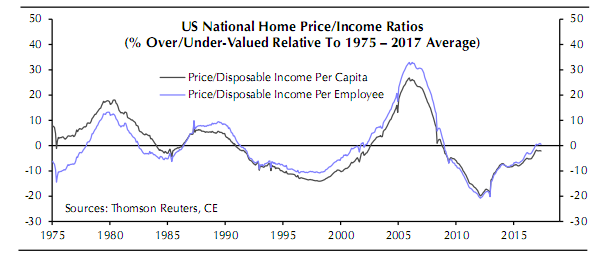
While historically low mortgage rates are translating into big savings for homeowners, those same low monthly payments are masking a troubling trend. While home values have been on the rise for the past year — in some areas appreciating by 15 percent or more annually — median wages haven’t kept pace. However, a worrying trend that emerged over time for the South is that the discrepancy between the growth rates of home prices and household income has been climbing since the 2000s. Since the 1960s, however, the difference between home prices and income has nearly doubled. By 2017, the nationwide price-to-income ratio was 3.6, showing over 3.5 years of household income was necessary to purchase a house. In fact, the nationwide price-to-income ratio hasn't been at a healthy balance since the 1990s.
Lower payment ratios significantly limit the risk of home price declines over the next 12 months. According to the CoreLogic Market Risk Indicators, 13% of metro areas were at risk for home price decrease in 2006, but that risk fell to near zero in 2021. To boil it down to its essence, it’s because home prices are increasing at a much faster rate than wages. To make matters worse, that gap between average wages and average home prices is growing at an accelerating rate. Zillow has noticed a trend that could become problematic for both the U.S. housing market and policymakers in coming months. Although price-to-income ratios were not as high for the two new tech hubs, Seattle and Denver, they either doubled or almost doubled the healthy average of 2.6.

Over that same time period, median household income, adjusted for inflation, has increased by a relatively minuscule 15%, from $59,920 to $69,178 in 2021 dollars. Moreover, three-quarters of metro areas had price-to-income ratios below 3.0, including several areas where home prices now greatly exceed average incomes. Illustratively, between 1988 and 2017, price-to-income ratios more than doubled in Miami (from 2.9 to 6.3), Denver (2.7 to 5.5), and Seattle (2.5 to 5.7).


No comments:
Post a Comment