Table of Content
- How To Remove Mold From Shower Curtains And Liners
- Remove using dental floss
- How to remove acrylic nails with an electric file/nail bit
- ‘Wednesday’ Star Jenna Ortega Flaunts Short Hair in New Instagram Post
- Method 1 – Acetone-Free Nail Paint Remover
- Warm Water Method.
- Remove using Acetone:
- Leave a Reply Cancel reply
Dental Floss Instructions.Using cuticle stick gently upraises your faux nails’ edges. This step would not be necessary if your acrylics have already loosened. You may need someone’s assistance for the rest of the process. Insert the dental floss underneath the acrylic nail once the edges have been lifted. Using the sawing motion, move the floss until it pops off.

If the nails are on the verge of coming off, you won’t need much effort to execute this. The key to this method is patience because it will take a lot of time. But be assured that it won’t leave your nails with the after-effect of acetone, brittleness and dryness. Many ladies that cannot do without manicures are now using acrylic nails.
How To Remove Mold From Shower Curtains And Liners
To make the best of your time, do one hand at a time and ensure each nail is covered. You should leave it on your nails for 15 to 20 minutes to allow the acetone to really soak through your nail. Leaving it on for this long will make the removal process much easier.
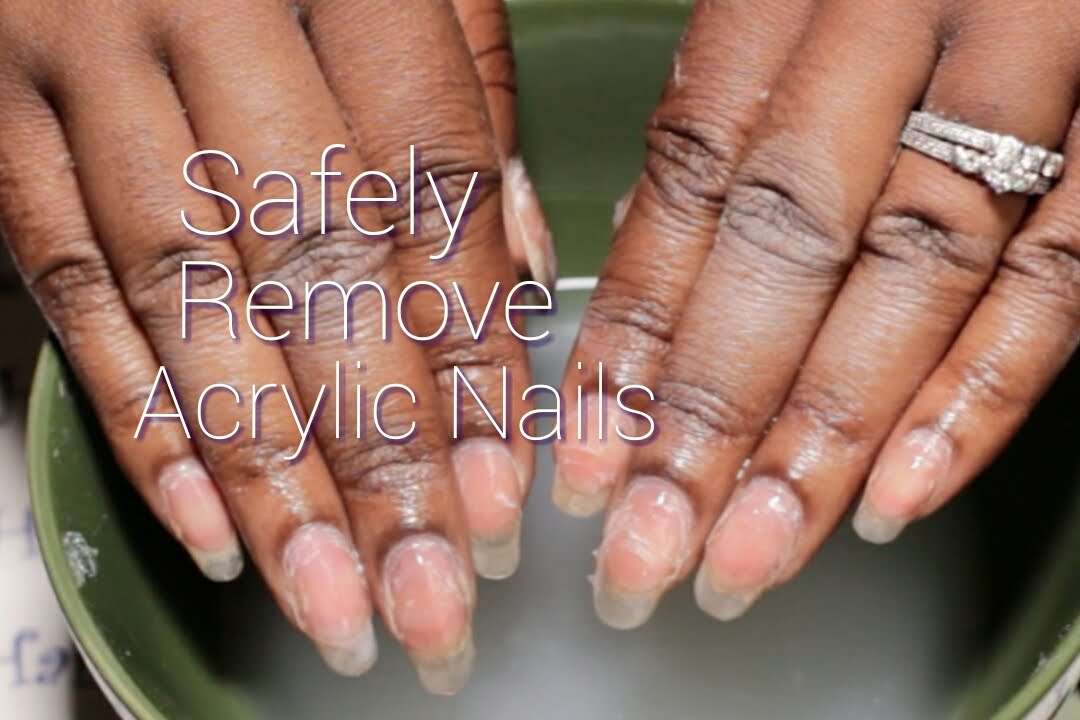
Be careful not to snip off your real nails. The top few layers of your nails may have been removed with the acrylic. Buff and file gently so as not to tear or damage them further when file and buff them. If the acrylic begins to harden again while you're buffing, use a cotton ball soaked in acetone to dampen it. You can also simply soak your nails in a bowl of acetone for 30 minutes if you know that acetone doesn't irritate your skin.
Remove using dental floss
If your nails are still fairly stuck on, put them back in the water mixture and let them soak for another 5 to 10 minutes. Your nails will receive adequate nutrition throughout this time to be healthy. After all, applying excessive amounts of chemicals to your nails is a no-no. Use an orange stick to scrape off the remaining false nails after they have become loose. Simply press a Q-tip dipped in oil against each nail for five minutes to remove them.

This will protect them from the harsh, drying effects of acetone. Fill up one bowl with acetone and another one with warm water, and put the bowl containing acetone inside the warm water bowl to warm it up gently. This article was co-authored by Kristin Pulaski and by wikiHow staff writer, Luke Smith. Kristin Pulaski is a Professional Nail Artist and the Founder of Paintbucket, a self-owned and operated nail salon based in Williamsburg, Brooklyn. She has over five years of experience running Paintbucket and is licensed as a nail technician. Paintbucket offers nail art manicures, pedicures, and soft gel extensions along with customized packages for wedding and bridal parties.
How to remove acrylic nails with an electric file/nail bit
Try removing fake nails with dental floss in a pinch. Slowly pry up the edge of your fake nail with a cuticle pusher, then wiggle the flosser underneath. While heading to the salon is an easy way to get fake nails removed, sometimes, you just want to do it yourself at home. We’ll give you 3 different methods for removing fake nails that you can do yourself without damaging your real nails.

Fill your bowl with some non-acetone nail polish. Submerge your finger and wait for thirty minutes. Take out your hands when you feel acrylics have loosened. This process is lengthy, but it will not damage your cuticles. "As you're soaking your acrylics, you'll notice they'll start to melt and become really gooey and gross-looking," says Mytien Le.
Using cuticle scissors under the acrylic nails, clip the nail away. Lift the edges and trim until the faux nail is completely removed. Using a buffer, polish your natural nails.

Wash your hands properly and apply cuticle cream or moisturizer to restore skin texture. Now dip your entire length of nails in acetone for 30 to 40 minutes. Trim your nails as short as possible with the help of nail clippers. Throughout this process, you'll want to ask yourself, "What would my manicurist do?" For starters, they'd set up a clean, well-ventilated work area. The main differences between a fungal infection, psoriasis, and bacterial infection are as follows. Up to 50 percent of people living in certain tropical areas have reported this skin infection.
The acrylic will be soft from the acetone bath, so take the opportunity to buff the rest of it away, until there’s no more residue left on your nails. Then, use nail clippers and a nail file to smooth the sharp edges and round out your nails. After, buff your nails lightly with a fine-grade nail buffer, moving from the base of the nail to the tip, to give them a nice, smooth sheen.
And that is why it is one of the methods of removing acrylic nails at home. You only need a nail clipper, tweezers, liquid soap, and warm water for this technique. “Your natural nails grow out regardless of how long your acrylics last, and you’ll start to see growth at your cuticle beds after two weeks,” she explains. Using dental floss to do away with your fake nails is a good idea. This method works even better when combined with the previous two methods. After soaking your nails in warm water or using cuticle oil, take dental floss and slide it under your fake nails.
Clipping your nails will help the acetone dissolve the acrylics more easily. Grab your phone, set a timer, and put on a good podcast, because it’s time to let your fingers soak! Make sure your nails are fully submerged so the polish starts to disintegrate.


No comments:
Post a Comment